 Leviathan Wakes
 is
book one in The Expanse series written by James S.A. Corey, which is the pen name of the
writing duo consisting of Daniel Abraham and Ty Franck. (Query: Why do authors use pen names when everyone already knows their real names? This is a
legitimate question. I really want to understand the reasoning behind this choice) The story is a mash up the science fiction and mystery genres set against the back drop of space. I loved it!
Humans have colonized Mars and an asteroid belt
located between Mars and Jupiter. Sufficient enough amount of time has passed
that generations have been born and grown up on the asteroids and on Mars. Martians
and belters think of themselves as separate and distinct from Earth. Not in the sense of being a different species, but in the sense of being citizens of different nations. This is especially true
of the belters who because of growing up in the lower gravity of asteroids
tend to be taller and thinner and have larger heads than humans from the inner
planets of Earth and Mars.
In one sense Leviathan is a story about global
politics and scarce resources. Instead of Earth bound nation-states the superpowers are planet
Earth and planet Mars. Earth has the things humans need to live - namely air, water, and soil where things can grow. Mars has the superior military force but its people live in domes because Mars's atmosphere is not yet suitable for human life outside of a dome. Belters are the poor colonials caught in the middle and at
mercy of the inner planets. They depend entirely on
Earth for oxygen, water, food – basically everything humans need to live. With a press of a button or maybe it is the turn of a knob, Earth can ration the amount of oxygen Belters breathe.
The story is told primarily from the points of view
of two men: Jim Holden and Detective Miller. Miller has been assigned a missing persons case. He is tasked
with finding a missing woman named Julie Mao. Julie left her wealthy family on Earth to
live and work among the Belters. Her parents want her back home on Earth.
Meanwhile Holden, a former soldier, works on a commercial
vessel hauling water around in space. That he works on a water hauler is apt in
part because the law of space is not unlike the law of the sea – if there is a
distress signal and your ship is the closest then you are duty bound to come to
the aid of the distressed ship if you are able. So when the Scopuli sends out a distress call, Holden and his shipmates go to
help only to witness a disaster. In alternating chapters Miller searches for a
missing girl while Holden and his crew try to figure out what secret is worth
killing over and who was willing to do the killing. Eventually Miller's and Holden's stories
intersect in an interesting way.
Effortlessly Diverse as It Is Entertaining
In December 2015 The Expanse, a science fiction series, began airing on the SyFy
channel. I originally bought this book with the
intention of reading it before the show started but that never happened. One of things I noticed immediately on the show was its racially and ethnically diverse cast. I wondered if that was due to
a conscientious casting director. It is not, or at least that is not the only
reason for the diverse cast. Daniel Abraham and Ty Franck imagined a future
that includes not only White people but also Asian people and Black people and
all kinds of other people. Even better, the characters of color read like fully realized people. Personally in my experience, and I realize other people's experiences may differ, science fiction seems to assume a world where diversity means a mixture of blonds and brunettes or if there is a person of color in the story, there is only the one. It was incredibly refreshing to find something different in Leviathan Wakes. Yes and
thank you people writing as James S. A. Corey.
Trying New Things: Hard Science Fiction
I have a confession. I like the idea of science but
am not particularly good at it. While I don’t purposely avoid it, it is not
something I seek out either. When I read a book that for one reason or
another has a lot of science (or complex math) my brain might initially try to
decipher the science but eventually my eyes glaze over and my brain treats the
science as magic and therefore as something that will never truly makes sense to me. What can I say other than I studied social sciences and humanities in
college and graduate school, not the physical sciences. Admittedly
part of this laziness on my part. Part of is not having the necessary background
knowledge and taking time to acquire the background knowledge would take me completely out of the story. So I accept the science as magic and quickly move on.
Leviathan Wakes is what people refer to as hard
science, meaning a lot of the science in the book is real. I knew that going to
it but read it anyway. Surprisingly I didn't mind the science. I was constantly looking stuff up to get a better understanding of things like gravity and its effect on the human body
and what the deal is with asteroids. Overall the science was manageable. It was
even interesting. Before reading Leviathan Wakes I thought of space the way I
think of Antarctica – an exotic locale that looks pretty in pictures but that I
will probably never visit and will spend little time thinking about. This book
made me actually interested in space and the planets in a way that I have never
been particularly interested. Not that I will ever go to space but I’m interested
in learning more about it.
Yes It Is Really that Good
My copy of Leviathan Wakes is an oversized
paperback, really the size of a hardback only with a soft cover, and is 561
pages long. Between the length of the book and the hard science, I expected to
spend at least two weeks reading it. Instead
I tore through it in about a week and the only reason it took that long was because there
were two or three days when I wasn’t able to get any (or almost no) reading
done at all due to other obligations. Getting through a 500+ page book in a week is a sign of good book in my opinion. Luckily it is part of a series. So I have more
books to read. Also, The Expanse the television series based on the books is
fantastic too. I am eagerly looking forward to season three.


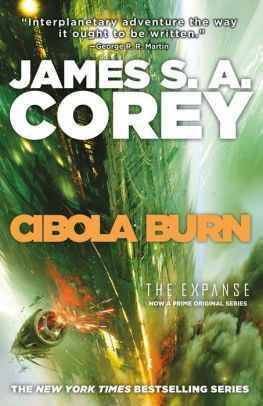 Without
the natural resources of Earth or the military might of Mars, the
people who live on the asteroids belt have always been treated like
second class citizens. It is not particularly surprising then that when
the ring opens up thousands of new worlds and one of them appears to be
earth like - that is with air, water and other things humans need - a
group of Belters decide to make it their new home. The Belter group
names the new planet Ilus and sets up a settlement. Unfortunately for
them, like colonial powers of the past the global powers that be don't
especially care whether someone else got their first. They see land they
want and assume they have to right to take it. The earth based UN
government decides to assert its "rights" by issuing a contract to Royal
Charter Energy (RCE) that gives the corporation the "rights" to New
Terra (otherwise known as Ilus) and all its resources. The fact that
people are already living on Ilus/New Terra matters not at all to RCE or
the UN. But it matters to Ilus’ new settlers and to show it matters,
the settlers set off an explosion as an RCE ship tries to land on the
new planet, thereby beginning the first war in the new frontier. The
UN's Chrisjen Avasarala and the OPA's Fred Johnson send James Holden and
the crew of Rocinante to keep the peace until the global powers can come up with a more permanent solution.
Without
the natural resources of Earth or the military might of Mars, the
people who live on the asteroids belt have always been treated like
second class citizens. It is not particularly surprising then that when
the ring opens up thousands of new worlds and one of them appears to be
earth like - that is with air, water and other things humans need - a
group of Belters decide to make it their new home. The Belter group
names the new planet Ilus and sets up a settlement. Unfortunately for
them, like colonial powers of the past the global powers that be don't
especially care whether someone else got their first. They see land they
want and assume they have to right to take it. The earth based UN
government decides to assert its "rights" by issuing a contract to Royal
Charter Energy (RCE) that gives the corporation the "rights" to New
Terra (otherwise known as Ilus) and all its resources. The fact that
people are already living on Ilus/New Terra matters not at all to RCE or
the UN. But it matters to Ilus’ new settlers and to show it matters,
the settlers set off an explosion as an RCE ship tries to land on the
new planet, thereby beginning the first war in the new frontier. The
UN's Chrisjen Avasarala and the OPA's Fred Johnson send James Holden and
the crew of Rocinante to keep the peace until the global powers can come up with a more permanent solution.  Winner of the 2016 Hugo Award for Best Novella, Binti is the story of a woman who leaves her family and her homeland to attend the prestigious Oomza University. She is the first of the Himba people ever to be offered a position at the university. With an insatiable curiosity and an unquenchable thirst for knowledge and learning, she can't say no to the offer although that is what her family would have her do. Himba people don't ordinarily leave their homeland. Binti boards the ship bound for the university anyway. Along the way the ship is attacked and Binti finds herself in the middle of a conflict between the Meduse and the university.