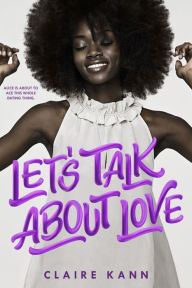
Let’s Talk About Love is a young adult romance about a young woman named Alice who has a crush on a boy, doesn’t know what she
wants to be when she grows up, and is an on-again, off-again fight with her
best friend.
While I found this book frustratingly slow at times, there
were a number of things I liked about it. In particular I liked…
- …the diversity. Both the main character and her love interest are people of color. Alice is a young African-American woman in college and Takumi is a slightly older Japanese American man working towards becoming a teacher.
- …that the Alice works at a library part-time. In fact, the library is where she meets Takumi.
- …that I got to learn something new. Let’s Talk About Love was a gentle introduction to asexuality and biromanticism, two things I have only recently become aware of.
- … the intersectionality – Not only does this story feature POC characters but the main character is an African-American woman who is also asexual and biromantic and all of her identities contribute to who she is and pose their own set of issues.
- …that the story acknowledges micro aggressions and other crap that people of color constantly deal with.
- …the acknowledgement of the struggle of being the only one or the first one. Alice struggles over how to handle telling people about her asexuality. She is happy in her identity but at the same time doesn’t want to have to constantly explain herself to people. She doesn’t want this one thing – her sexuality – to be the characteristic that defines her in people’s eyes. That felt honest.
Overall, I enjoyed this although it was slow at points.
While an interesting character, Alice is also immature and her immaturity got
old pretty quickly. Her go-to solution for dealing with any problem is to run
away and avoid it. There is a long stretch of book where it is mostly Alice
finding ways to avoid her family and friends. On the upside, it allows her to
spend more time with Takumi.
Speaking of Takumi, I wanted more from him. Or I would love to read another
book from the point of view of a character like him. Alice tells a story from
her high school years when her and a bunch of girls created profiles on a
dating app and then had a contest to see which of them attract the most boys.
One of the White girls in the group tells Alice she will probably lose because
Black women, along with Asian men, are considered the least desirable in the
dating world. Now the main love story of this book involves a Black woman who
is asexual and an Asian man. At one point Alice tells Takumi in all honesty
although she really likes him romantically she is not interested in having sex
with him. I wanted to know more about how he felt, particularly in light of
story Alice told earlier.
Let’s Talk About Love is Claire Kann’s first novel. She did
pretty good her first time out. It was definitely worth the read and I look forward to reading he next book.

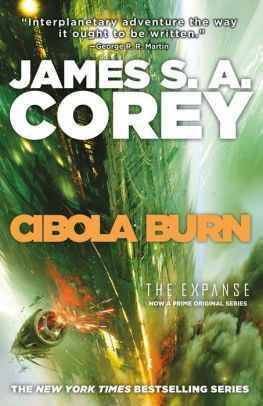 Without
the natural resources of Earth or the military might of Mars, the
people who live on the asteroids belt have always been treated like
second class citizens. It is not particularly surprising then that when
the ring opens up thousands of new worlds and one of them appears to be
earth like - that is with air, water and other things humans need - a
group of Belters decide to make it their new home. The Belter group
names the new planet Ilus and sets up a settlement. Unfortunately for
them, like colonial powers of the past the global powers that be don't
especially care whether someone else got their first. They see land they
want and assume they have to right to take it. The earth based UN
government decides to assert its "rights" by issuing a contract to Royal
Charter Energy (RCE) that gives the corporation the "rights" to New
Terra (otherwise known as Ilus) and all its resources. The fact that
people are already living on Ilus/New Terra matters not at all to RCE or
the UN. But it matters to Ilus’ new settlers and to show it matters,
the settlers set off an explosion as an RCE ship tries to land on the
new planet, thereby beginning the first war in the new frontier. The
UN's Chrisjen Avasarala and the OPA's Fred Johnson send James Holden and
the crew of Rocinante to keep the peace until the global powers can come up with a more permanent solution.
Without
the natural resources of Earth or the military might of Mars, the
people who live on the asteroids belt have always been treated like
second class citizens. It is not particularly surprising then that when
the ring opens up thousands of new worlds and one of them appears to be
earth like - that is with air, water and other things humans need - a
group of Belters decide to make it their new home. The Belter group
names the new planet Ilus and sets up a settlement. Unfortunately for
them, like colonial powers of the past the global powers that be don't
especially care whether someone else got their first. They see land they
want and assume they have to right to take it. The earth based UN
government decides to assert its "rights" by issuing a contract to Royal
Charter Energy (RCE) that gives the corporation the "rights" to New
Terra (otherwise known as Ilus) and all its resources. The fact that
people are already living on Ilus/New Terra matters not at all to RCE or
the UN. But it matters to Ilus’ new settlers and to show it matters,
the settlers set off an explosion as an RCE ship tries to land on the
new planet, thereby beginning the first war in the new frontier. The
UN's Chrisjen Avasarala and the OPA's Fred Johnson send James Holden and
the crew of Rocinante to keep the peace until the global powers can come up with a more permanent solution.  The soap opera that began in Crazy Rich Asians continues in China Rich Girlfriend. This wasn't quite as good as the first book. Mind you, there is still plenty of excessive spending, sumptuous food, and planet sized egos. The tension in the first book was all about Asian-American Rachel meeting her rich boyfriend's family for the first time in Singapore, how she would react to their billionaire lifestyles, and how they would react to her. This second book in the series introduces Rachel's long lost father and his family. They are just as crazy rich (and plain crazy) as Nick's family but given that Rachel is meeting them for the first time and is therefore not as close to them as Nick was to his family the stakes felt much lower. Rachel and Nick who are ostensibly the main characters, are more observers than participants in the craziness, which further has the effect of putting distance between the reader and the story. I did like this. I just hope the final book in the trilogy packs a bit more punch.

 Detective Antoinette Conway is on the murder squad, just like she always dreamed, but at times it is closer to a nightmare. The only woman on the squad, Conway is constantly subjected to harassment. But she keeps going, solving cases with her partner Stephen Moran, the newest addition to the squad and the only person who seems happy she's there.
 Born a Crime is Trevor Noah's memoir of his childhood in South Africa. He was born during apartheid when miscegenation laws were still on the books in South Africa, making his conception - his mother is Black and his father is White - literally a crime. Given that Noah was born during apartheid, I expected stories of violence and sadness. I wasn't expecting to laugh as much as I did. There is some violence and sadness but I laughed more than anything else. Noah tends to see the positive side of life and the absurdity of it. At least that is how he comes across in this book.