Thursday, February 18, 2016

How I Learned to Read and Love Comics and Graphic Novels

I didn’t grow up reading comics. I have been always been a reader but comics were not a genre or format that appeared on my radar too often. It was simply never really my thing. Truth to be told, for a long time I didn’t really realize that comic books and graphic novels were a thing at all. It is sort of funny considering how much I love things that are shall I say comic adjacent or related, like cartoons and superhero movies. But for whatever reason, I never got around to the source material, which again is strange considering that often if a movie is based on book I will try to read the book.

I first came across the graphic novel Watchmen when the movie came out. It was a movie based on a book, so had to read the book. At the time a fellow reader and I had a conversation about how frustrating it was reading comics and graphic novels. This will sound wrong and strange to long time fans of the format, but the pictures were the problem. The pictures were slowing us down and it wasn’t always clear who was speaking or sometimes what order one was meant to read the panels. In reading Watchmen I realized that I had to learn how to read a story told in a graphic format. It was not the same as reading a regular book.

After Watchmen the occasional graphic novel or comic made its way into my reading pile, but not too many. That changed in 2011 with The New 52, the relaunch by DC Comics of its superhero comic line. I decided it was time to learn to read comics. So I forced myself to read more slowly and dived into the New 52. They were mostly superhero stories. Some I stuck with, some I didn't. More importantly the New 52 introduced me to the world of comics. Since then I've found many superhero and non-superhero comics and graphic novels to love.

Each month my book group has a theme and we read book based on the theme. In January the them was graphic novel or comic and the book chosen by the masses was Ms. Marvel by G. Willow Wilson. It got mixed reviews. Among other complaints, many in the book group expressed frustration with the pictures. (If you are used to ready fairly quickly, pictures really slow you down.) The January meeting got me thinking about some of the great comics and graphic novels I've read over the last few years. Here are some of my favorites:

Title: Saga, Volume 1, Author: Brian K. VaughanSaga rules! I don't have the words to fully describe the epic wonderfulness of this series. It is an intergalactic love story. A man and a woman from opposite sides of a war meet when he is her prisoner. They fall love, run away, and have a child. Both sides want to end them before anyone realizes that is possible for people on opposite sides of the war to not hate each other. The series open with a woman giving birth. How many times have you seen that in comic, a novel or anywhere else? The story is amazing. The artwork is amazing. If you read just one comic or graphic novel, read Saga.   
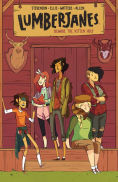
Title: Lumberjanes, Volume 1, Author: Noelle Stevenson  Friendship to the max! That's what I learned from Lumberjanes. At Miss Qiunzella Thiskwin Penniquiqul Thistle Crumpet's Camp for Hardcore Lady-Types five friends encounter mysteries, crazy boys, secret caves, and all kinds of supernatural shenanigans. They respond with a kick butt attitude, resourcefulness, creativity, a sense of adventure, and above all they always remember the importance of being and having good friends. 

Title: Bitch Planet, Volume 1, Author: Kelly Sue DeConnickThe back of my copy of Bitch Planet ask "Are you non-compliant? Do you fit in your box? Are you too fat, too thin, too loud, too shy, too religious, too secular, too prudish, too sexual, too queer, too black, too brown, too whatever-it-is-they'll-judge-you-for-today? You just may belong on Bitch Planet." I consider myself my feminist and this hit all my feminist buttons in a good great way. In a nutshell, women who are too whatever are sentenced to imprisonment on Bitch Planet, hello patriarchy. I have only read volume 1 and don't know how the story is going to play out, but already I love it. Almost as good as the story are the "ads" at the end of every issue. Every part of this book was well thought out. If you only read two comics or graphic novels, read Saga and Bitch Planet. 
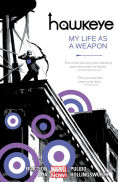
Title: Hawkeye, Volume 1: My Life as a Weapon (Marvel Now), Author: Matt Fraction Matt Fraction's Hawkeye is about Clint Barton and Kate Bishop when they're not being Avengers. Now I don't know Hawkeye's origin story. I don't know why there are two Hawkeyes and can't say if this is canon or whatever, but I will say that I really enjoyed Fraction's run as the author of Hawkeye. Clint and Kate get to be heroes without superpowers. It was awesome.

Title: Sex Criminals, Volume 1, Author: Matt FractionThe premise of Sex Criminals is provocative. When Suzie has sex timr literally stops. For years she thought she was the only one who this happened to. Then she meets Jon. They hook up and think what should we do while time is standing still? Rob banks, of course. It sounds ludicrous and dumb, but it's not, I promise. Sex Criminals is about that first real adult relationship. They have issues to work through - his depression, her family, and the like. Sex Criminals is funny and not as graphic as the title might imply. It is a definite must read. 
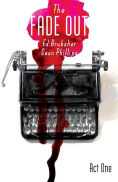
Title: The Fade Out, Volume 1, Author: Ed Brubaker I just started The Fade Out and am pretty impressed so far. It is a noir mystery set in 1948 Los Angeles. A man wakes up with a dead woman in the other room and little memory of how either of them got there. I love old noir movies and books like The Big Sleep and The Maltese Falcon. The Fade Out reminded me of those movies. The writing and the artwork really evokes the seediness and glamour of post-war Hollywood. I can hardly wait to read Act Two (volume 2) and see what happens next.

Monday, February 15, 2016

Begging For It by Lilah Pace

fpo Begging For It continues Vivienne and Jonah's story, which began in Asking For It. The two were initially drawn together by their mutual interest in role playing forceful, violent sexual fantasies. In the beginning they wanted to know as little as possible about each other to make the role playing seem more realistic. But eventually emotions developed, and now Vivienne and Jonah are more than just strangers with benefits. They are making a go of it as a couple.
Complications arise. Vivienne and Jonah reveal their past tragedies to one another and Jonah has a difficult time being with Vivienne when he learns her story. Things get even more difficult when what was a fantasy becomes reality when a real rapist starts terrorizing the city of Austin. An ex-girlfriend with whom Jonah shared his fantasies suggests that the the police add him to their suspect list. Jonah's stepfather uses the scandal to try to take control of the family fortune. With trouble swirling around him, Jonah pulls away from Vivienne with the idea that he is "protecting" her.

One of the things I like most about this book and its predecessor is how concepts like agency, consent, and freedom of choice are handled. There is a point when Jonah insists that they give up their fantasies because he worries that they are harmful to Vivienne. She bristles at his protection, telling him that it is like he stopped seeing her and now only sees (and treats) her as a victim. She tells him,

"But what I've had with you is the one honest sexual relationship of my entire life, and if giving up that honesty is the price of getting you back, it's too high." (page 30)

But it isn't all about Vivienne and her feelings. When the situation with his stepfather presses his emotional buttons and Jonah decides he can no longer handle the dark places he goes to during their role play. Vivienne is unhappy with his decision but her therapist Doreen reminds Vivienne that Jonah has the right to say no too. Jonah gets to have his limits.

I really liked this short series and would recommend them, with the caveat to those with trigger concerns. It was eye opening and unlike anything I've read before. I wonder what Lilah Pace will come up with next.

Wednesday, February 10, 2016

Asking For It by Lilah Pace

fpo  A year or so ago I stumbled across a blog called Romance Novels for Feminists. It has since become one of my favorite blogs in part because it has introduced me to many books that might have otherwise not made their way onto my radar, but mostly because it takes a critical and analytical approach to books in a way that I haven't encountered much outside of college. The fact that this critical and analytical gaze is applied to books that fall into the romance category is even more interesting, and frankly, refreshing. Romance Novels for Feminists takes the genre seriously. It was through this blog that I came across Asking For It by Lilah Pace (a pseudonym for New York Times bestselling author, I so want to know who!).

Asking For It is unlike anything I have ever read before it. Vivienne can only reach climax by fantasizing about being raped. Jonah has fantasies about forcing women to submit to him. These two find each other and engage in consensual, sexual role playing in which he forces himself on her over her objections. Despite how it sounds, this isn't titillating simply for the sake of arousal. Vivienne and Jonah are both working out their issues and they are both aware of that.

Vivienne and Jonah's relationship is one of consent, care, passion, and compassion. It is clear when a scene begins and when it ends. Vivienne has a safe word that Jonah respects. They establish rules and limits and discuss medical histories before any sex takes place. When a scene is over Jonah makes sure Vivienne is okay physically and emotionally. Besides fulfilling each other's sexual fantasies, Vivienne and Jonah give each other the opportunity be who they really are not only without judgment, but with compassion. We don't get too much of Jonah's story here but as for Vivienne, she gets to enjoy her sexuality for the first time without pretending or being made to feel about bad about voicing and getting what she wants.

Vivienne has always been ashamed and embarrassed by her fantasies. Jonah helps Vivienne in a way that years of therapy have not - he offers to fulfill her fantasies and he does so without judgment. Of course, her therapist has told Vivienne repeatedly that being forced is a common fantasy and that is okay to fantasize about whatever. But until she meets Jonah, she is skeptical. Vivienne shared her fantasy with a boyfriend once before and he refused. (Vivienne's therapist reminds her that her ex-boyfriend is entitled to have limits too.) 

In the beginning Vivienne and Jonah agree to remain strangers as much as possible to make their role playing seem more real. That can't last of course. Jonah and Vivienne provide each other with a safe place to explore. They are intimate and honest with each other in a way that they haven't been able to be with anyone else. What starts out as semi-anonymous sex develops into something deeper. This is a romance, after all. Still, it does not have the classic happily ever after. Well not exactly, but it does leave room for potential. Perhaps that is how the sequel Begging For It ends? I can't wait to find out.

Thursday, February 4, 2016

Dorothy Must Die by Danielle Paige


fpoDorothy Must Die is a retelling, or really more of an unauthorized sequel to The Wizard of Oz. In this version Dorothy returned to Oz because life on a Kansas farm just couldn't compete after her adventures in Oz. Upon her return Dorothy is welcomed as a hero and made something of a co-princess, next to the real princess, Ozma. Dorothy adores being adored, even more, she adores power and magic. It isn't long before the once sweet girl from Kansas becomes an evil tyrant, sucking the magic out of Oz and its inhabitants. By Dorothy's side are her trusty companions from her original adventures. They have changed just as much as Dorothy has. The Scarecrow has become a mad scientist of sorts. The Cowardly Lion feeds on people's fears and sometimes on the people themselves. His heart full of unrequited love for Dorothy, the Tin Men is her loyal henchmen and leader of Dorothy's army of soldiers.


Into this new Oz comes Amy, another Kansas girl. Before she and her trailer flew into Oz on the winds of a tornado, Amy's life wasn't so great. Her dad left, her mom is caught in a spiral of alcoholism and drug addiction, and at school Amy is a favorite target for bullies. It's hard to say whether being dropped in Oz is an improvement in Amy's life or the opposite.

As she makes her way down the yellow brick road Amy makes some friends while witnessing the devastation Dorothy has brought to Oz. She finds that good witches have turned wicked. Wicked witches are still wicked but are fighting to free Oz from the tyranny of Dorothy. There's a third group, fighting Dorothy and steering clear of the wicked. It soon it becomes clear that Dorothy must die, and nearly everyone is convinced only the new girl from Kansas can kill the original Kansas girl.

The premise sounded great but the execution was just alright. It was not particularly compelling or interesting. Amy has a complicated life with difficult problems but all that fades away when she gets to Oz. She becomes a lot less interesting. Even less interesting is the totally predictable and uninspiring instant budding romance Amy finds herself in.

What did interest me about this story were the various factions fighting against Dorothy. I wanted to know more about them, particularly the non-wicked faction. Unfortunately, not much time was spent on their story. Perhaps there story comes in the next installment of the series but it is doubtful I will continue with this series.

Thursday, January 28, 2016

Books on the Small Screen

Check out my latest post on Mocha Girls Read. It's all about this season's new shows that are based on, or at least inspired by books. There's SyFy channel's The Magicians based on the trilogy by Lev Grossman, The Expanse based on the series by James S. A. Corey (also on SyFy), and many more. Find out more at Mocha Girls Read.


Tuesday, January 26, 2016

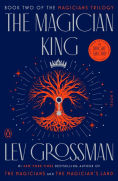
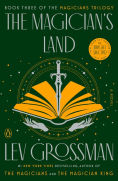
Lev Grossman's Magicians Trilogy

fpo           fpo          fpo


Lev Grossman's The Magicians trilogy takes Harry Potter, Narnia, and other stories and tropes and mashes them up into something new. It left me with lots of complicated thoughts that I’m still trying to sort out and for that alone I’m grateful for this series.  

I usually try to avoid spoilers when writing about books here but this time I'm making an exception. If you want to avoid spoilers, stop reading here. If not, here are some of my thoughts:  

The trilogy starts out as a coming age / figuring out life in your 20s story. At the beginning of the first book Quentin is a high school senior. He’s at the point of in life when it feels like you’re waiting for life to begin, as if one’s current situation isn’t actual life. Quentin gets that life-is-starting-now moment when he finds himself sitting in a room taking an entrance exam for Brakebills, the one and only magical college in North America. It all seems so promising, so fun and exciting, and then it isn’t. Turns out that doing magic is well, less magical than one might expect. It requires memorization, mastering precise hand movements, and learning ancient languages. One thing that I found odd (and that I'm still wrestling with) is that in Grossman's conception magic is not fun. It can be fun at times, but mostly it is tedious, hard work. Not only it is hard, in a way magic ruins people. Magic makes some parts of ordinary life (like holding down a job) easy if not unnecessary. Without something to care about Quentin and his friends spend their post-college days drinking and partying, which ends up being less fun than it sounds. It's like they one the lottery but don't know what to do now that they no longer have to work to pay the rent.

In the first two books Quentin is forever looking for an adventure. He is never happy with what he has. This would be a less annoying trait if he were working toward something. For instance, if you’re dream is to build the best widget and your first prototype is good but you know you can do better so you keep trying, then it is good to not be satisfied. That is drive; that is motivation and ambition. Quentin’s dissatisfaction with life is more about it never being like it is in the Narnia like Fillory books. Quentin’s whole concept of adulthood is wrapped up in a fantasy and when confronted with the reality of day-to-day life he’s bored. But instead of building a career or a relationship he just goes looking for another adventure. Even more annoying is that Quentin never anticipates the potential dangers of his adventures. It is like he expects life to be like a children’s story where there is always a happy ending. 

One of the most interesting characters in the series is Julia. Julia sat for the exam Quentin did but failed. I think I, as a reader, am supposed to feel sorry for Julia or feel that she was unjustly treated in this instance. I don’t.  When Julia tells her story in The Magician King (book 2) she remarks that Quentin walked into the exam room “buckled right down and killed that exam, because magic school? That was just the kind of thing he’d been waiting to happen his whole life.” The way I see it Quentin and Julia were faced with an unexpected opportunity. Quentin grabbed it and went with it. He didn’t think too hard about it; he just accepted it and decided to see where the opportunity would lead. Julia, in contrast, sat back and thought about what the opportunity might mean. I don’t fault Julia for the way she reacted. It was totally reasonable under the circumstances, but I don’t feel sorry for her either or feel she was treated unfairly. She had the same chance as Quentin and didn’t take it. There is something to be said about being open to opportunities and ready to grab them when they come sailing by.

Notwithstanding my lack of sympathy for Julia’s initial rejection by the world of magic, I totally loved her journey (well except for the part I’ll get to in a minute). After failing the exam her memory was supposed to be erased of all things magic and Brakebills related but it didn’t take.  Julia remembered, not all of it but there was a thread of something that kept nagging her. She grabbed that thread and ended up institutionalized and multiple prescriptions for anti-depressants. Once again Grossman made magic not fun. In The Magician King it is practically a symbol for mental illness. Mental illness diagnosis notwithstanding, Julia went and found magic on her own, Brakebills be damned. And she wasn’t the only one. I love the idea that there was this underground world of magic. One of the things in that struck me about the first book was not only that magic was boring, it was elitist and exclusionary. Outside of Brakebills all kinds of people are doing magic. 

Julia ascends up the ranks of the magical world and becomes the best there is. More importantly she finds a home among other prescription carrying depressives. Together they dig for the roots of magic and end of stumbling upon a demon trickster god who kills most of them and rapes Julia. This was infuriating. Not only that she was raped, but that she loses her humanity. She becomes a powerful goddess in the end, but exactly what is the message here?

Another interesting character is Alice. She came from a magical family. After her older brother died while at Brakebills the college decided it was best to cut ties with the family and declined to invite her to attend to the school. Alice forced her way in anyway and and she was brilliant. She hooks up with Quentin. They are cute together, then they are horrible to each other. Then she dies in book one, or rather she becomes a ball of blue rage and power. Quentin brings her back to life and she is not happy about it, at least not at first. I’m not sure what to think about this particular sequence. Did he do the right thing? He was trying to help her. He couldn’t have known that she liked being a ball of rage and power. 

The ending was not entirely unexpected, but still pleasing. Fillory was dying and Quentin has to figure out a way to save it. He does save it, but he also moves on and decides to create his own land, which is fitting. It is time for him to grow up and create something for himself. It was a good ending to the series.

Although I am not entirely sure what to think of this series I would recommend it for the simple fact that it gave me lots to think about. This is the kind of book I could talk about for hours.

Thursday, January 21, 2016

Bookish Podcasts

I recently began writing for Mocha Girls Read, an online and in-person book club, of which I'm a member. My first post was published today. Check it out and find out about The Wonderful World of Bookish Podcasts. Maybe you already are fans of these podcast, or perhaps you'll discover a new one to enjoy.

Happy reading and listening!