
A year or so ago I heard that a new show was coming to
Oprah’s channel OWN called Queen Sugar. It
stared Rutina Wesley, who I have admired since True
Blood. There’s a lot I like about the show so I thought I’d check out
the source material: Queen Sugar by Natalie
Baszile. As it turned out, the book and TV show share a title, character names,
a couple plot points, and that’s about it.
***Warning: I really wanted to discuss this book and you can't really discuss a book without spoiling it a little, so beware there are some slight spoilers ahead. ***
Natalie
Baszile's Queen Sugar begins with a woman named Charlotte “Charley”
Bordelon and her daughter Micah driving from California to Louisiana. Charlie’s
father Ernest has inexplicably left her an 800-acre sugarcane farm. Why
Charlie’s father left her the farm is unclear. On the television show the
father leaves his farm to his three children. There it makes some sense in that
although his children have chosen different career paths, they at least grew up
in Louisiana and have some familiarity with farming life. In contrast, the
Charley in the book grew up in Los Angeles, is an art teacher, and knows
absolutely nothing about farming. Further, Ernest ties the farm up in a trust
so Charley can’t sell it. If she doesn’t farm the land successfully, then
Charley will lose the farm. Frankly it seemed like a screwed up inheritance to
leave a daughter who by all description was a very good and caring daughter,
but I guess Baszile had to get Charley to Louisiana somehow.
There is so much going on in Queen
Sugar, too much really. It hints at a range of issues, introduces
several plot points, and then never follows through. One of those issues is
race in the south. Charley is an African-American woman trying to farm
sugarcane in the south – something that has traditionally been the province of
men, especially White men. In the beginning of the novel there is very much a
sense of Charley making waves in rural Louisiana merely by being an African-American woman. There are a couple White male characters early in the story
who are completely disrespectful and dismissive of Charley. It is suggested
that they are out to destroy her in part because they want her land and in
part because they don't think she belongs in their farming world. Then those
characters disappear and we don't get anything more on that plot point. There are other hints at race
issues. For instance, Charley’s daughter Micah wants to enter a baking contest
but her great-grandmother remarks that it is only the rich White women that
ever win. Micah doesn’t win but then it isn’t clear that she should have.
In large print on the back cover of my copy of Queen Sugar it says the novel is an “intimate story
of mother-daughter reinvention, endurance, and hop amid the complexities of the
contemporary South.” I have no idea who wrote that description but I don’t
think they read the same book I did. For starters there isn’t much of a
mother-daughter story. There are several mothers and daughters: Charley and
Micah, Lorna and Charley, and Miss Honey and Violet – but none of those take
center stage.
The relationship between Charley and Micah is particularly
frustrating. In an early chapter of the book Charley and Micah are driving to
their new farm. Eleven-year-old Micah is not happy with the move, which is
understandable. Charley is playing with her wedding ring, something she does
when she’s anxious. Micah asked to see it so Charley gives the ring to her
daughter who throws it out the window of their moving car. Micah suffers no
consequences for actions. Charley and Micah don’t even really talk about it.
Throughout the book Micah repeatedly engages in rude and destructive behavior. Her behavior
is partly excused as preteen hormones, which I didn’t buy as an adequate
reason, but even if that was the sole reason for her behavior, her behavior
needed to be addressed. I was waiting for a confrontation or conversation
between Micah and Charley in which both vented about their frustrations. That
confrontation never happened.
Queen Sugar is mostly Charley’s story but her half-brother
Ralph Angel figures heavily into the story as well, arguably to the book’s
detriment. I’m not sure what Baszile was trying to say with this character or
what she wanted readers to feel about him. He has a sad backstory. Ernest (Ralph
Angel and Charley’s father) got his high school girlfriend (that is Ralph
Angel’s mother) pregnant and then pretty much abandoned Ralph Angel and his
mother. There is a strong suggestion that Ralph Angel’s mother suffered from a mental
illness but no specifics are provided (why I don’t know). At some point in his teens Ralph Angel moved to
California to live with his father, who by then had married and had a second
child. Ernest was a much better father the second time around, doting on baby
Charley. Ralph Angel couldn’t help but be jealous. He began acting out and was
eventually kicked out of his father’s house and sent to live with his
grandmother in Louisiana. So super sad, right? Fast forward two decades later, and Ralph Angel is still that jealous, angry kid.
The situation in California was not entirely Ralph Angel’s
fault. His father and stepmother could have done better but then so could have
Ralph Angel. That ends up being the story of Ralph Angel’s life. The world
could have done better by him, but Ralph Angel could have also done better.
Instead he spends most of his time getting high, blowing jobs, blowing
relationships, and being angry at and jealous of his half-sister. He feels like
she has everything while he has nothing. Never mind that just like Ralph Angel,
Charley tragically lost her spouse and is now a single parent looking for a new
start. On the television show I also find the Ralph Angel character frustrating
at times (but not nearly as frustrating as the character in the book). On
the show the character is younger so I can excuse some of his behavior as youthful
stupidity. In the book however, Ralph Angel is a man in forties with a kid. He
was just too old to be acting the way he did.
I kept waiting for Ralph Angel’s moment of redemption. In
the beginning he seemed like a good father making bad decisions but trying to
do better. For a short while it looks like he might do better then it all goes
down hill. Again, some of what goes wrong isn’t his fault, but a lot of it is
Ralph Angel acting like an entitled prick who never takes responsibility for
any of his actions. He is constantly focused on what he thinks is owed to him.
And in the end, Charley ends up feeling bad because she hasn’t done more to
help him. That actually made me angry because she could not have done more.
Even if she had somehow found been able to find a way, there is only so much one can do
for a person who is unwilling to change. Sometimes life just
isn’t fair and all you can do is forget about other people's business and mind your own. Ralph Angel was always too focused on Charley and everyone else.
I want to end on something I did like about this book – the
description of sugarcane farming. Moby Dick is
one of my favorite books. (Stay with me, there’s a point coming.) Part of what
I love about Heman Melville’s classic is the thing most people hate about it –
the long interludes about the whaling industry.
I’m never going to read a nonfiction book about whaling, but teach me about
whaling while telling me an adventure story and I’m in. I like learning about
stuff when I read, even better when it is mixed in with my fiction. It’s like
two books for the price and time of one. So it is no surprise that I enjoyed the
parts of Queen Sugar that delved into the
complexities of sugarcane farming. As Charley learned about planting and
harvesting sugarcane, I learned.
Queen Sugar is Natalie
Baszile’s first book and I think it showed. It was a good, though not great,
first book. I would read another one by her. She obviously has lots of ideas
and I think with more practice her stories will get better.
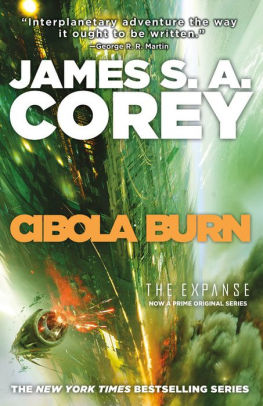 Without
the natural resources of Earth or the military might of Mars, the
people who live on the asteroids belt have always been treated like
second class citizens. It is not particularly surprising then that when
the ring opens up thousands of new worlds and one of them appears to be
earth like - that is with air, water and other things humans need - a
group of Belters decide to make it their new home. The Belter group
names the new planet Ilus and sets up a settlement. Unfortunately for
them, like colonial powers of the past the global powers that be don't
especially care whether someone else got their first. They see land they
want and assume they have to right to take it. The earth based UN
government decides to assert its "rights" by issuing a contract to Royal
Charter Energy (RCE) that gives the corporation the "rights" to New
Terra (otherwise known as Ilus) and all its resources. The fact that
people are already living on Ilus/New Terra matters not at all to RCE or
the UN. But it matters to Ilus’ new settlers and to show it matters,
the settlers set off an explosion as an RCE ship tries to land on the
new planet, thereby beginning the first war in the new frontier. The
UN's Chrisjen Avasarala and the OPA's Fred Johnson send James Holden and
the crew of Rocinante to keep the peace until the global powers can come up with a more permanent solution.

 The soap opera that began in Crazy Rich Asians continues in China Rich Girlfriend. This wasn't quite as good as the first book. Mind you, there is still plenty of excessive spending, sumptuous food, and planet sized egos. The tension in the first book was all about Asian-American Rachel meeting her rich boyfriend's family for the first time in Singapore, how she would react to their billionaire lifestyles, and how they would react to her. This second book in the series introduces Rachel's long lost father and his family. They are just as crazy rich (and plain crazy) as Nick's family but given that Rachel is meeting them for the first time and is therefore not as close to them as Nick was to his family the stakes felt much lower. Rachel and Nick who are ostensibly the main characters, are more observers than participants in the craziness, which further has the effect of putting distance between the reader and the story. I did like this. I just hope the final book in the trilogy packs a bit more punch.

 Detective Antoinette Conway is on the murder squad, just like she always dreamed, but at times it is closer to a nightmare. The only woman on the squad, Conway is constantly subjected to harassment. But she keeps going, solving cases with her partner Stephen Moran, the newest addition to the squad and the only person who seems happy she's there.
 Born a Crime is Trevor Noah's memoir of his childhood in South Africa. He was born during apartheid when miscegenation laws were still on the books in South Africa, making his conception - his mother is Black and his father is White - literally a crime. Given that Noah was born during apartheid, I expected stories of violence and sadness. I wasn't expecting to laugh as much as I did. There is some violence and sadness but I laughed more than anything else. Noah tends to see the positive side of life and the absurdity of it. At least that is how he comes across in this book.